Shot Placement, Organ Hits and Blood Trails in Hunting Games
Disclosure: this page contains Amazon affiliate links. As an Amazon Associate we earn from qualifying purchases, at no extra cost to you.
Ahh, the moment of truth, steady-thumbed marksman — the crosshairs settle, your heart pounds, and you squeeze. Then the real game begins. The shot is only half of it. In a good hunting game — like in real hunting — what happens after you pull the trigger matters just as much: did you hit the vitals, how far will the animal run, and can you follow the trail? Here’s how Way of the Hunter and theHunter: Call of the Wild (both on Amazon) handle shot placement and blood tracking, plus Way of the Hunter 2.
Short answer: both games reward hitting the vital organs — heart, lungs and, in Call of the Wild, liver — and punish poor hits with an animal that runs off wounded. Way of the Hunter’s Hunter Sense shows blood with details like color, amount and impurities that hint at what you hit. Way of the Hunter 2 adds a hunting dog that, per its official site, follows blood trails and tracks wounded game.
Where should you aim?
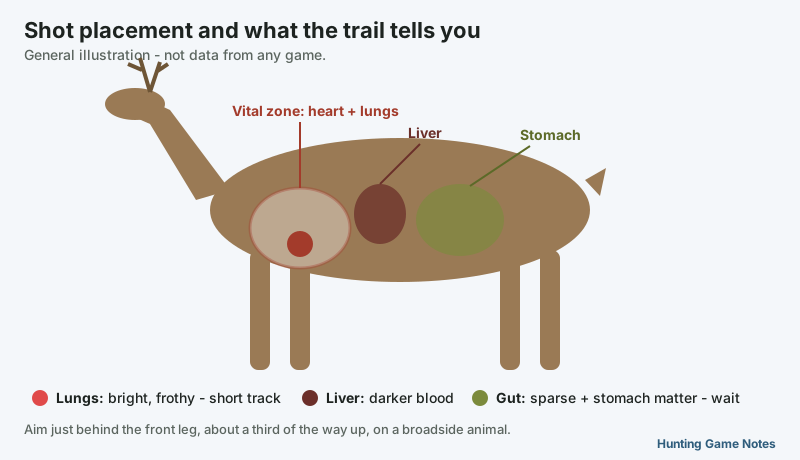
In real hunting, the target on a broadside deer is the heart-and-lung area just behind the front leg, about a third of the way up the body. Hunter-education courses teach this because it gives the quickest, cleanest kill. Hunting games use the same idea:
- Broadside gives the biggest vital target.
- Quartering away can work if you angle into the vitals.
- Quartering toward and head-on shots are much harder — players regularly advise waiting for a better angle.
theHunter: Call of the Wild
Here’s how players describe it — the developers haven’t published an organ-by-organ rulebook:
- Vital organs — heart, lungs, liver — or a spine or neck break are what players say you need for a clean kill and to pass certain mission checks.
- Poor hits leave a wounded animal and a blood trail to follow, and longer tracking.
- After the harvest, the game shows details about your shot, which many players use to learn shot placement.
Way of the Hunter
- Readable blood. A review on Roundtable Co-op describes Hunter Sense highlighting blood trails
with detail such as colour, amount and impurities
— clues to what you hit. You activate it while standing still. - Bad hits run. The same review: hit the wrong spot and the animal
will run off at pace, bleeding along the way.
- Strict placement. On the game’s Steam forums, players report that marginal shots often aren’t fatal, and the usual advice is to get closer and wait for broadside.
Way of the Hunter 2: the tracking dog
The sequel’s official site says its hunting dog detects animal signs, follows blood trails, and tracks wounded game
, and gets better with training. It also says different ammunition balances penetration and cavity size
, which ties shot effect to your ammo choice (see ballistics in hunting games).
A little truth every player learns sooner or later: a quiet pause after the shot beats a mad dash every single time.
How close is it to real tracking?
Real hunters read blood a lot like these games suggest. General guidance from hunter education and wildlife agencies:
- Bright, frothy blood usually means a lung hit and a short track.
- Darker blood often points to the liver or muscle.
- Sparse blood with stomach matter suggests a gut hit — real hunters wait much longer before following it.
- Wait before tracking. Wildlife agencies advise giving a hit animal time unless you saw it go down, and much more time after a poor hit.
Games compress that waiting and searching, but the best ones keep the core idea: a good shot makes a short, easy trail, and a bad one costs you.
Tips that work in any of them
- Wait for broadside when you can.
- Aim just behind the front leg, a third of the way up.
- Use enough gun and the right ammo for the animal.
- Mark where the animal was standing and where you last saw it.
- Read the blood — color and amount tell you how hard to push.
Clear audio helps you hear where a hit animal runs — a good gaming headset is worth it.
Good shots, patient tracking and a happy ending at the trophy lodge — that’s the whole loop, and it never gets old.
Sources and further reading
- Way of the Hunter 2 official site — dog follows blood trails, tracks wounded game; ammo penetration vs cavity
- Roundtable Co-op: Way of the Hunter review — Hunter Sense blood detail, wounded animals run
- Call of the Wild Steam discussion: vital organs and harvest checks — community findings
- Hunter-ed.com: where to shoot — real-world vital zone
- NC Wildlife Resources Commission: tips for recovering game animals — real-world tracking (PDF)
Questions and answers
Where should I shoot animals in hunting games?
The heart-and-lung area just behind the front leg on a broadside animal, like in real hunting. It gives the cleanest kill and the shortest trail.
Does Way of the Hunter show what I hit?
Its Hunter Sense highlights blood trails with details like color, amount and impurities, which hint at the hit, according to reviews.
Does Way of the Hunter 2 have a blood-tracking dog?
Yes. Its official site says the hunting dog detects animal signs, follows blood trails and tracks wounded game.
What do I need to hit to pass a harvest check in Call of the Wild?
Players report you need a vital organ (heart, lungs or liver) or a spine or neck break. The developers haven’t published an exact rulebook.